Research
Supervised by Prof. Volker Deringer, I work in the field of atomistic simulation, with a focus on applying machine learning methods for amorphous materials modelling.
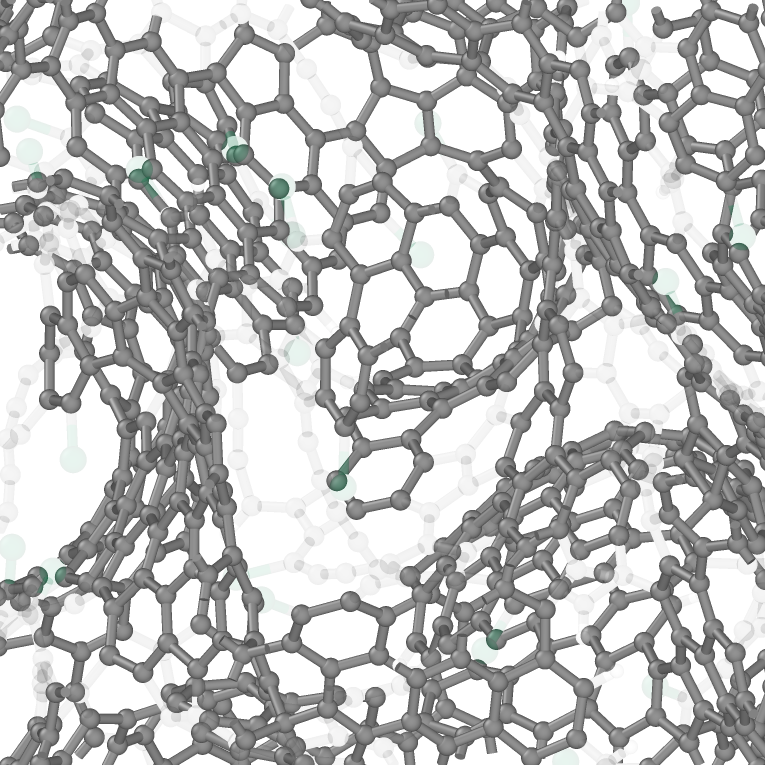
Atomistic Mechanisms of Hard Carbon Formation from Polyvinylidene Chloride
This work investigated the pyrolysis of polyvinylidene chloride (PVDC), a classic precursor of hard carbon. The simulations resolved the transformation from a crystalline polymer to a disordered carbon network, providing insights into the dehydrochlorination, carbon–carbon cross-linking, and structural rearrangements that drive carbonisation.
[arXiv]
[arXiv]
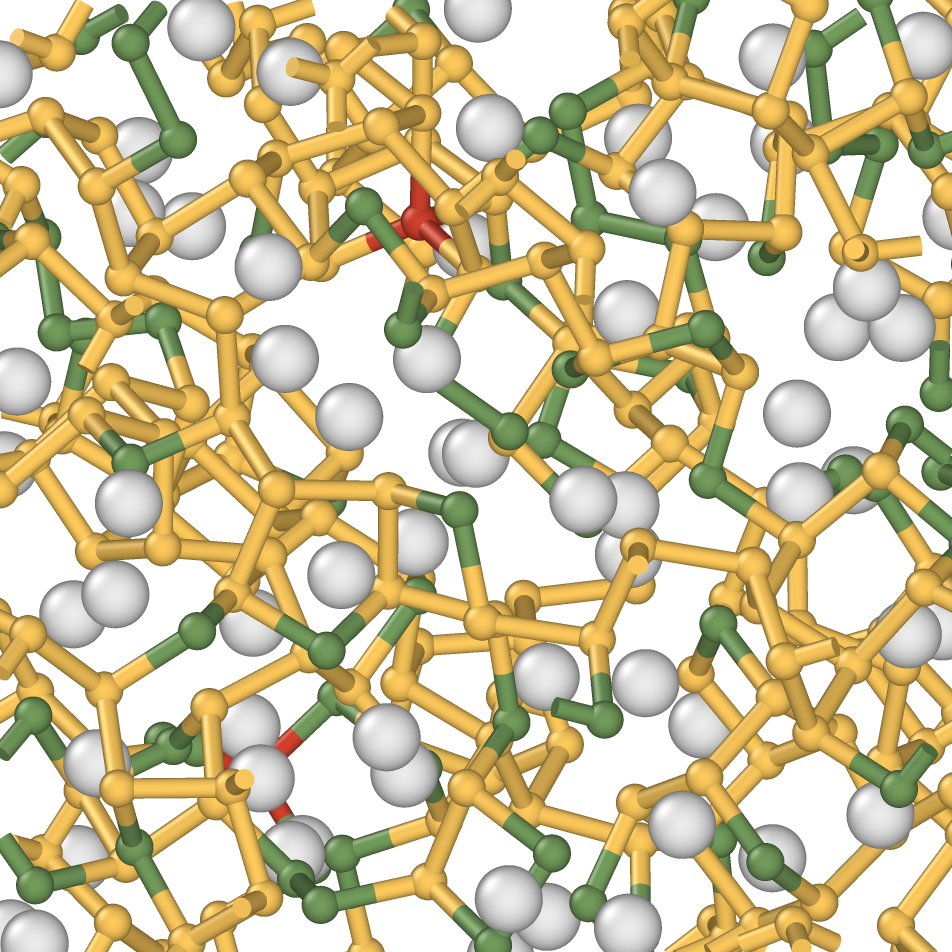
The Zintl-Klemm Concept in the Amorphous State: A Case Study of Na–P Battery Anodes
Leveraging on an equivariant machine-learned interatomic potential, this work evaluated the applicability of the traditional Zintl–Klemm rules to the amorphous Na–P binary system, commonly formed in sodium-ion batteries with phosphorus anodes, and provided further structural, energetic, and electronic analyses.
[Publication | arXiv | News]
[Publication | arXiv | News]
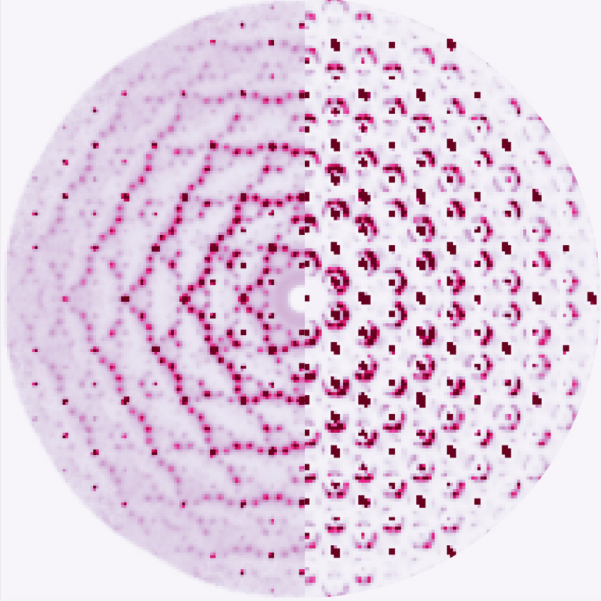
Local Invariance Model for Short-Range Order in Binary Thermoelectrics
This work introduced a general modelling strategy for binary systems with occupational disorder, using a local-invariance energy expression with the Monte Carlo algorithm. The algorithm was applied to the potential thermoelectric material V1+δSb, which exhibits substantial correlated disorder arising from excess vanadium atoms and the coupled displacive disorder of neighbouring atoms.
[Thesis]
[Thesis]